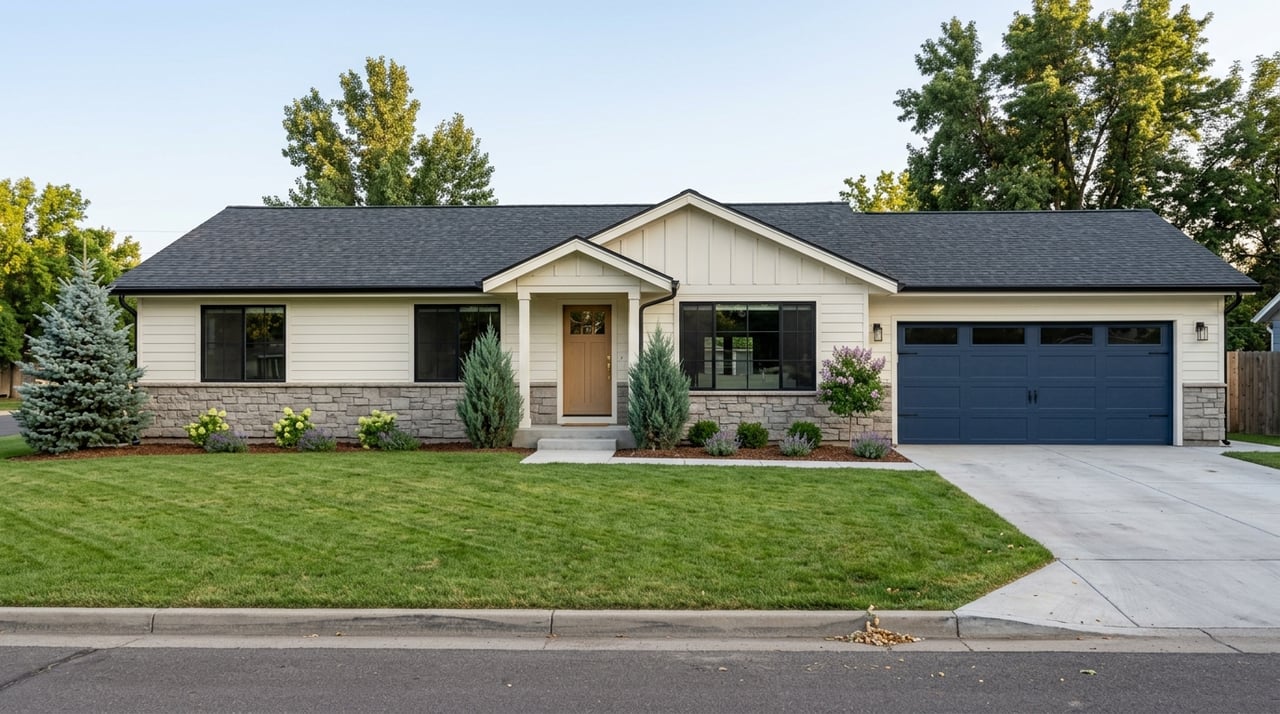
How To Price Your Laramie County Home Strategically
July 9, 2026
July 9, 2026
Wondering how to price your Laramie County home without scaring off buyers or leaving money on the table? You are not alone. Setting the right asking price can feel stressful, especially in a market where values, pace, and buyer budgets can shift from one part of the county to another. The good news is that a smart pricing strategy is not guesswork. It is built on local sales, real market conditions, and a clear look at your home’s strengths and challenges. Let’s dive in.
A strong price does more than put a number on your home. It helps attract serious buyers early, supports a smoother showing period, and can reduce the risk of your listing going stale.
In Laramie County, recent housing data points to a market in the high-$300,000s. Redfin reported a median sale price of $398,804 for the three months ending May 2026, while Zillow placed the typical home value at $390,847 and noted 357 homes for sale as of May 31, 2026. Those figures are not identical, but they tell the same story: buyers are active, and price still matters.
Pricing carefully matters even more when financing costs are higher. Freddie Mac reported the average 30-year fixed mortgage at 6.43% on July 2, 2026, and higher rates can push monthly payments up fast. For many buyers, even a modest price increase can affect what feels affordable.
One of the biggest pricing mistakes is treating all of Laramie County the same. County officials describe the area as southeast Wyoming’s population center, with a location that connects major highways and rail lines. That broad geography creates very different submarkets across Cheyenne, the county’s eastern communities, and rural areas.
Your home’s location inside the county can have a major impact on value. The Laramie County Assessor divides the county into appraisal neighborhoods made up of similar properties, based on location, boundaries, economic forces, and other local factors.
You can see that difference clearly even within Cheyenne. Recent closed sales cited by Redfin showed homes in Historic Cheyenne ranging from about $245,000 to $365,000, while Western Hills saw recent sales from roughly $499,900 to $850,000. That is a wide gap, and it is exactly why county-level averages should never be your only pricing guide.
If you want a realistic asking price, start with recently sold comparable homes. Sold comps show what buyers were actually willing to pay, which makes them far more useful than active listing prices.
Active listings can be helpful for context, but they are still asking prices. They do not tell you whether a seller priced too high, priced low to create attention, or has been sitting on the market without strong interest.
A solid pricing strategy usually looks at homes with similar:
This is the foundation of a comparative market analysis, or CMA. A CMA uses local sold data and then adjusts for the ways your home is similar to or different from those sales.
Pricing is not just about size and address. Condition matters, and it can move value in a meaningful way.
Appraisal guidance and county assessment practices both point to the same core factors: condition, improvements, location, size, and sales information. That means buyers and valuation professionals are looking beyond surface-level appeal.
If your home has updated systems, recent renovations, or well-maintained finishes, those improvements can strengthen your position. On the other hand, deferred maintenance, unfinished projects, dated interiors, or work that does not appear fully completed can limit what buyers are willing to pay.
This does not mean every seller needs a full remodel before listing. It does mean your price should reflect the home buyers will actually walk through, not the version you hoped to finish someday.
It is tempting to check an online estimate and call it a day. These tools can be useful for a quick reference, but they are not a pricing strategy.
Zillow states that its Zestimate is an automated value model, not an appraisal, and recommends pairing it with a professional valuation tool like a CMA or appraisal. Automated estimates can vary because they may use different comparable properties, different timing, and different formulas.
That matters a lot in Laramie County. Homes with acreage, outbuildings, unique updates, or uneven maintenance histories often do not fit neatly into an algorithm. A local pricing conversation can better account for those details.
Price is not just about value. It is also about timing.
Recent data suggests that homes in Laramie County are moving, but buyers are still selective. Zillow reported homes going pending in around 13 days, while Redfin reported a 23-day median days on market for closed sales. Those are different measurements, but both suggest that properly priced homes are not sitting forever.
When a home is priced too high at the start, you may miss the strongest early window of buyer attention. Many buyers watch new listings closely, and the first days on the market can be some of the most important.
If your home enters the market at a realistic number, you may have a better chance of attracting qualified buyers while your listing still feels fresh.
Tax districts do not directly determine your asking price, but they can shape how buyers think about total monthly cost. Laramie County notes that mill levies are set by tax district, and those districts can include counties, cities, water or sewer districts, fire districts, and school districts.
For buyers comparing similar homes, carrying costs matter. If two homes feel close in value, differences in taxes or district-related costs can influence how a buyer views affordability.
That does not mean you should discount your home automatically. It means your pricing should make sense within the full ownership picture buyers are considering.
A good CMA should feel transparent, not mysterious. You should understand how the price recommendation was built and why certain comps were included or left out.
A thoughtful CMA often includes:
This kind of pricing discussion is especially helpful if your home has features that are harder to measure with a simple online estimate. That might include larger lots, rural settings, detached buildings, workshops, or a mix of updates and maintenance needs.
Even in an active market, small pricing errors can cost you time and leverage. A strategic approach helps you avoid decisions based on emotion or broad averages.
Here are a few common mistakes sellers make:
It also helps to keep different valuation numbers in their proper place. A county assessment is used for tax purposes. An appraisal is an independent valuation often tied to lending. A CMA is a seller-focused tool built to help set a smart asking price.
The best asking price is usually not the highest possible number. It is the number most likely to attract serious buyers while supporting your goals.
That number should reflect what has actually sold nearby, how your home compares on condition and features, and how buyers are responding in your part of the market right now. In a place as varied as Laramie County, that local context matters.
If you are preparing to sell, the most useful next step is a clear, honest review of your home against recent comparable sales. That gives you a better chance of entering the market with confidence instead of testing a number and hoping for the best.
When you are ready for practical, local guidance, Irene Reese can help you build a pricing strategy grounded in real Laramie County market data and your home’s unique features.
Stay up to date on the latest real estate trends.
With deep local knowledge and a commitment to your goals, we’re ready to help you move forward with clarity and confidence.