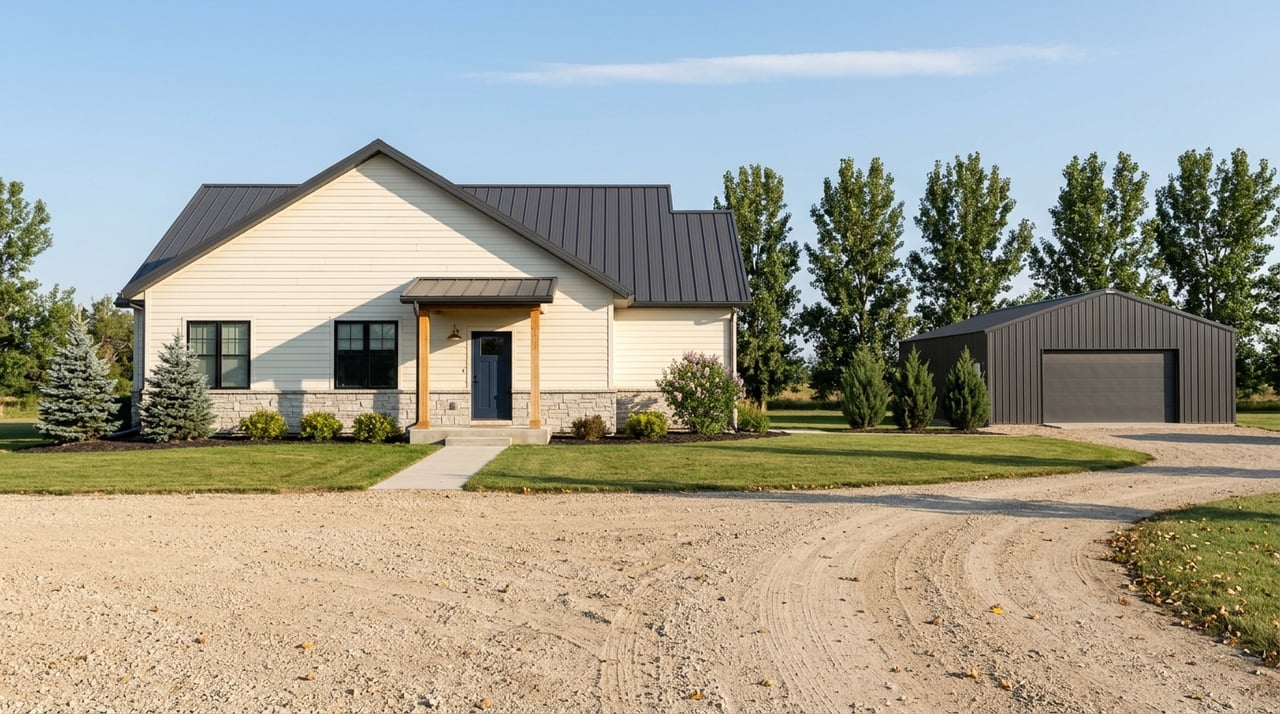
Buying Acreage Or Land In Goshen County: What To Know
June 18, 2026
June 18, 2026
If you are dreaming about more elbow room in Goshen County, you are not alone. Buying land or acreage can open the door to a home site, a shop, agricultural use, or simply more space, but rural property comes with details that are easy to miss if you are used to in-town purchases. The good news is that with the right questions upfront, you can avoid surprises and buy with more confidence. Let’s dive in.
Not all acreage in Goshen County works the same way. The county assessor classifies land into categories that include urban, suburban, and agricultural land, and agricultural land may be further described as irrigated crop land, dry crop land, or rangeland.
That matters because the land’s classification can affect how it is assessed and how you evaluate its fit for your plans. If you are looking at a parcel outside town, it helps to know whether you are buying ground that has been treated as agricultural land or something else.
In Wyoming, agricultural land is not taxed only by market price. Goshen County states that agricultural land is assessed at 9.5% of its productivity value under normal conditions.
Wyoming law also sets rules for when land qualifies as agricultural. In general, the land must be used for an agricultural purpose, cannot be part of a platted subdivision unless it is a qualifying parcel of 35 acres or more, and must meet revenue or use requirements. Goshen County notes that owners generally need at least $500 in annual gross agricultural revenue, or $1,000 if the land is leased.
If agricultural status matters to your purchase, ask for records that support how the property has been used. The assessor says classification is determined through tools like aerial photography, owner conversations, and other mapping sources, so consistency between the seller’s information, maps, and property records is important.
A lot of buyers hear that Goshen County has no zoning regulations and assume anything goes. The county’s Planning & GIS page says it currently has no zoning regulations and no building inspections, but that does not mean every parcel can be used however you want without further review.
In practice, the real controls may come from the deed, subdivision status, private covenants, and any state or county permits tied to your intended use. That is why a parcel that looks wide open on the surface can still come with important limits.
If the property was recently split, is being created as new acreage, or involves a new plat, dig into that early. Goshen County handles subdivision matters through Planning & GIS and maintains subdivision applications and submission timelines.
This is especially important if you are buying land that has not yet been fully created as a separate parcel. You will want to know where that process stands before you get too far down the road.
With land, the legal description is not just paperwork. Goshen County’s Clerk requires a correct county legal description, notarized original or certified documents, and a Statement of Consideration when ownership changes.
The county’s parcel viewer can be helpful for general reference, but the county also says mapping data is for display only. In other words, online parcel maps are not a substitute for recorded documents or a survey.
A fence, path, or long-used access route may not match the recorded boundary. If corners, easements, or boundary lines are unclear, bringing in a surveyor can help you understand exactly what you are buying.
That becomes even more important when water-right maps or disputed lines are part of the picture. A little clarity before closing can prevent a lot of stress later.
One of the biggest due diligence items for acreage in Goshen County is road access. The county’s Road & Bridge Department maintains more than 1,200 miles of roads and is the first contact for road-use permits, addressing, haul-route approvals, and work in county road right-of-way.
If access is by a county road, private road, or easement, confirm exactly how you will reach the property and whether that access is legally documented. Do not assume that because a road exists, your access rights are fully in place.
If the parcel fronts a state highway, driveway access may involve WYDOT access rules. That means a great-looking property on a highway still needs review to confirm how access can work.
This is one of those issues that can shape the property’s usefulness from day one. It is much better to confirm it early than to discover limitations after closing.
Water is central to Wyoming land ownership. If you plan to drill a well, the Wyoming State Engineer’s Office says a permit is required before drilling.
The State Engineer also notes that water rights can be searched by legal description, and a well permit does not give you a right-of-way or easement across someone else’s land to reach that well. That is a key point for buyers looking at land with off-site water access questions.
In Wyoming, water rights matter because they are treated as property rights. The state also says water rights and reservoir rights appurtenant to land are assessed and taxed with the land.
If a parcel is being marketed with irrigation history, a stock water setup, or other water-related value, make sure you understand what rights are actually tied to the property. This is not an area for guesswork.
If the parcel is not served by a public sewer system, septic feasibility should be near the top of your list. Goshen County’s current small wastewater permit package says a permit is required before construction.
The application must include an exploration pit and percolation tests, and final inspection must be scheduled before the system is covered. The county also requires 48 hours’ notice for inspection.
For buyers, the takeaway is simple: do not assume a home site will automatically support the septic system you need. Confirming feasibility early can save time, money, and disappointment.
Rural utility service in Goshen County can vary from parcel to parcel. County budget materials for 2025-2026 include district-based services such as water and sewer districts, including West Highway and Hawk Springs.
That is a useful reminder that utility availability should be confirmed for the specific property you want to buy. Even neighboring parcels may not have the same service options.
Land purchases usually need a little more investigation than a typical in-town home purchase. A land-savvy real estate broker can help you spot issues early, but it is also smart to involve the title company early because access, easements, water rights, and legal descriptions can all affect whether the property works for your goals.
A surveyor can be especially helpful when corners, fence lines, or easement locations are uncertain. If you plan to finance the purchase, talking with your lender early also matters because access, water, and septic feasibility can affect whether the parcel fits the loan you want.
For rural lifestyle buyers, day-to-day practicality matters just as much as the land itself. Goshen County says it has nine fire protection districts, with two additional districts included within county boundaries.
That makes it worthwhile to ask how the parcel fits into local service coverage and what emergency response expectations may look like. It is also one more reason why local guidance can make a big difference when you are comparing acreage options.
Before you make an offer on land in Goshen County, slow the process down enough to confirm the basics. A practical checklist includes:
Acreage can be a great investment in your lifestyle, your plans, or your future use of the property. The key is making sure the parcel fits your goals on paper, not just in photos.
If you are thinking about buying acreage or land in Goshen County, having a local guide can make the process feel much more manageable. Irene Reese and the team at 307 Realty Professionals bring practical local knowledge and relationship-first service to help you evaluate land with confidence.
Stay up to date on the latest real estate trends.


With deep local knowledge and a commitment to your goals, we’re ready to help you move forward with clarity and confidence.